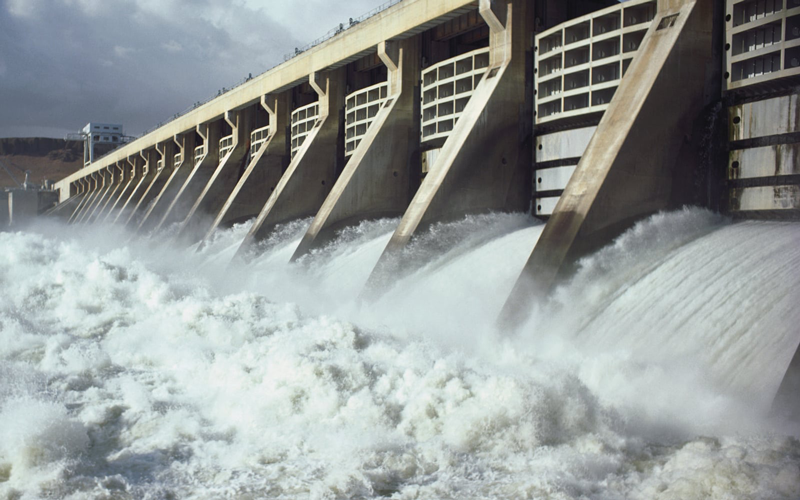

The High Dam and Aswan Reservoir
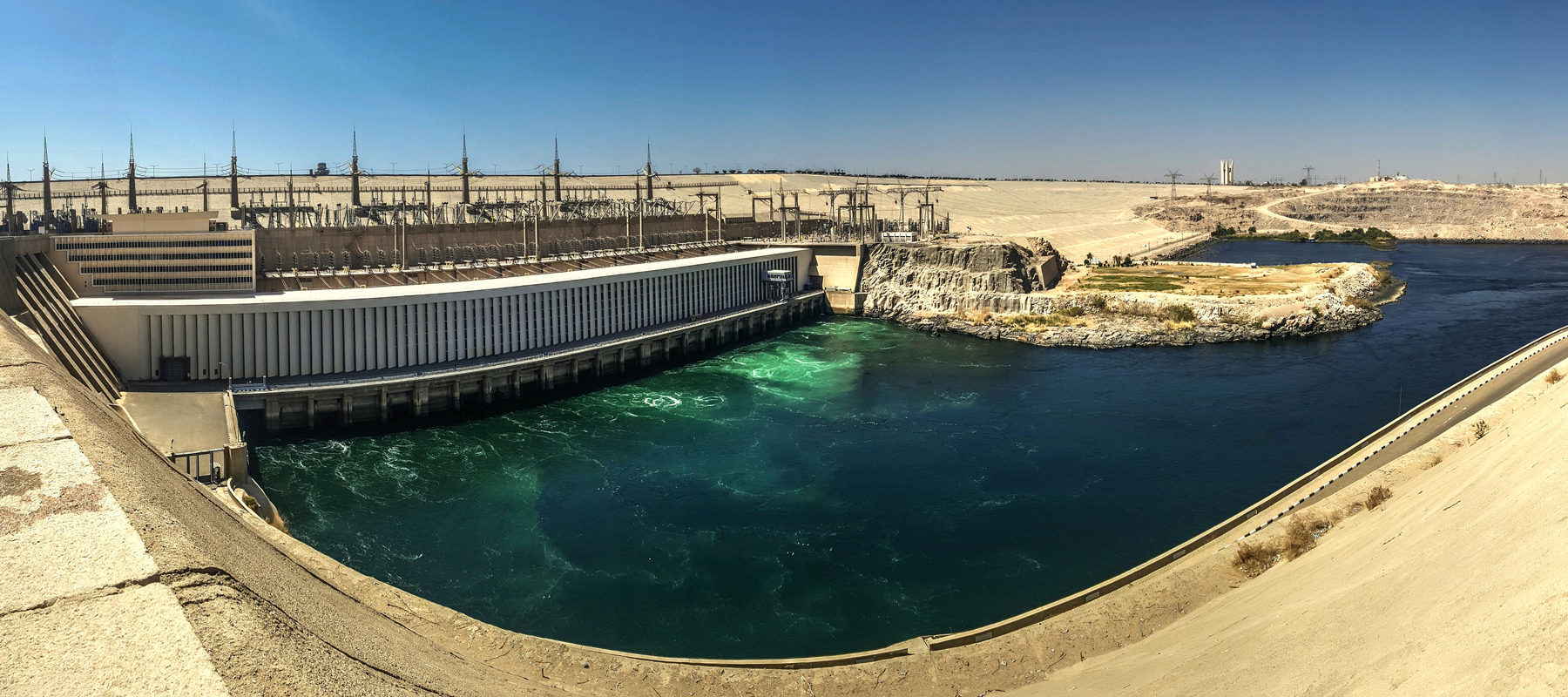
The High Dam is considered the greatest and largest engineering project of the 20th century in terms of architecture and engineering, surpassing other giant global projects in this regard. The High Dam was built to protect Egypt from high floods that used to overflow the country, submerging vast areas or wasting into the Mediterranean Sea.
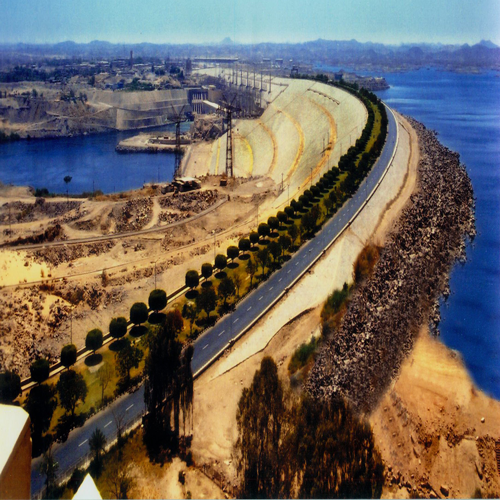
: Importance of building the High Dam
The Egyptians have recognized the importance of the Nile since ancient times. Annual storage projects were established, such as the Aswan Reservoir and the Jebel Aulia Reservoir on the Nile, to control the river’s variable inflow. Barrages were also built on the Nile to regulate irrigation across different river basins.
However, annual storage was only a partial solution for controlling and mastering the Nile, as the river’s inflow varies greatly from one year to another-it can reach about 151 billion cubic meters or drop to 42 billion cubic meters annually.
This significant variation from year to year makes reliance on annual storage extremely risky, as it could expose agricultural lands to fallow periods in years of low inflow.
Therefore, the idea emerged to construct a massive dam on the Nile to store water in high-inflow years for use in low-inflow years. Thus, the High Dam became the first continuous storage project at the basin countries level to be implemented within Egypt’s borders.
Steps in implementing the project :
• The Egyptian engineer of Greek origin, Adrian Daninos, presented to the leadership of the 1952 Revolution a project to build a massive dam at Aswan to impound the Nile flood, store its water, and generate electricity from it.
• Studies began on October 18, 1952, based on a decision by the Revolutionary Command Council, carried out by the Ministry of Public Works (currently the Ministry of Irrigation and Water Resources), the Army Corps of Engineers, and a selected group of university professors. The consensus was that the project could meet Egypt’s water needs.
• In early 1954, two German engineering companies submitted a design for the project. An international committee reviewed this design and approved it in December 1954, along with the establishment of specifications and implementation conditions.
• Egypt requested financing for the project from the World Bank. After thorough studies, the World Bank approved the project’s technical and economic feasibility.
• In December 1955, the World Bank offered assistance equivalent to a quarter of the dam’s construction costs.
• The World Bank withdrew its offer on July 19, 1956, due to colonial pressures.
• On December 27, 1958, an agreement was signed between Russia (formerly the Soviet Union) and Egypt to loan Egypt 400 million rubles to implement the first phase of the dam.
• In May 1959, Soviet experts reviewed the dam designs and suggested some minor modifications, the most important of which was changing the location of the power station and using a special technique for washing and compacting sand when used in building the dam body.
• In December 1959, an agreement was signed for the distribution of the dam reservoir water between Egypt and Sudan.
• Work on implementing the first phase of the dam began on January 9, 1960, including excavating the diversion channel and tunnels, lining them with reinforced concrete, pouring the foundations of the power station, and building the dam up to the 130-meter level.
• On August 27, 1960, the second agreement was signed with Russia (formerly the Soviet Union) to loan Egypt an additional 500 million rubles to finance the second phase of the dam.
• In mid-May 1964, the river water was diverted into the diversion channel and tunnels, the Nile’s main course was closed, and water storage in the lake began.
• In the second phase, construction of the dam body continued to its completion, the power station was finished, turbines were installed and operated, transformer stations and power transmission lines were established.
• The first spark was launched from the High Dam power station in October 1967.
• Full water storage in front of the High Dam began in 1968.
• In mid-July 1970, the project structure was completed.
• On January 15, 1971, the official inauguration celebration of the High Dam took place.