
About The Ministry
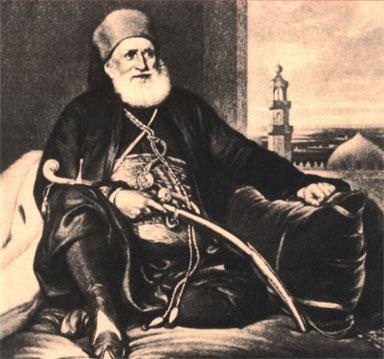
In 1836, the Department of Public Works was established under the Diwan of Schools during the reign of Muhammad Ali Pasha. In 1857, the Ministry of Public Works was created, encompassing various departments such as railways, telegraphy, surveying, housing, agriculture, the Port of Alexandria, antiquities, the Opera House, the Zoological Garden, the Aquarium, sanitary drainage, and irrigation.
In 1914, the name was changed from the Nizara of Public Works to the Ministry of Public Works, retaining its responsibilities for surveying, the Port of Alexandria, antiquities, the Opera House, sanitary drainage, meteorology and natural phenomena, and the Helwan Observatory, in addition to irrigation.
In 1964, Republican Decree No. 301 of 1964 was issued regarding the restructuring of the government, limiting the ministry’s activities to irrigation and drainage works, leading to its renaming as the Ministry of Irrigation.
In 1977, Republican Decree No. 587 of 1977 was issued, adding land reclamation responsibilities to the ministry, resulting in its renaming to the Ministry of Irrigation and Land Reclamation.
In 1978, Republican Decree No. 365 of 1978 was issued, reverting the ministry’s name to the Ministry of Irrigation and limiting its activities to irrigation and drainage works.
In 1987, Republican Decree No. 449 of 1987 was issued, amending the ministry’s name to the Ministry of Public Works and Water Resources.
In 1999, Republican Decree No. 409 of 1999 was issued, changing the ministry’s name to the Ministry of Water Resources and Irrigation.
Ministry’S Mandates
Developing agricultural production while upgrading pumping station operations using the latest technological methods.
Achieving the water abundance of new expansion lands and for the desired vertical expansion within the framework of available water resources.
Construction, operation and maintenance of irrigation and drainage pumps stations.
Follow-up the development of the northern shore of the Delta and the protection of corrosion within the framework of an integrated plan in which all the necessary projects are determined, priority and economic feasibility.
Representing the Arab Republic of Egypt in technical talks with the countries located on the Nile Basin to determine a share of the revenue and control and not to exceed the agreed water quotas.
Hydrological and hydrometrological studies must be done in the lakes plateau to draw the main lines of new projects necessary to increase the revenue of the Nile River and reduce the losses, with the countries located on the Nile Basin.
Developing methods of creating survey maps for engineering projects and detailed topographical survey maps of cities, agricultural and desert lands and establishment, formation and printing of surveying and geographical maps.
Carrying out the work of expropriating real estate and land for the public benefit and the surveying works necessary to implement the laws of agricultural reform and theReal Estate Registry.
Identify the problems that hinder the launch towards achieving the desired objectives of the Ministry and develop the necessary solutions.
Develop and update the laws that include the use of water and prevent its pollution and the preservation of watercourses , irrigation , drainage facilities.
Intensify the work of research and studies until the application comes in accordance with the latest scientific theories that are commensurate with the Egyptian conditions.
Developing and enhancing scientific and practical knowledge of available human energies.
Implementation of irrigation and drainage projects, including open and covered drainage systems, maintenance of water channels and their structures, and execution of civil and mechanical works for irrigation and drainage projects, as well as horizontal expansion initiatives.
Planning, designing, and implementing a drainage policy for agricultural lands to extend its network across all Egyptian lands, ensuring the preservation of soil fertility.
Monitoring all water resources, including surface water, groundwater, and rainwater.
Planning, designing, and implementing projects for the development of water resources from the Nile, its tributaries, and various sources, including surface water, groundwater, and drainage water.
Preserving the Nile as the primary water artery for Egypt, developing its system to align with expected future changes, and working to enhance its navigational, touristic, and hydroelectric power generation potential within a comprehensive plan to develop the Nile course and strengthen its bridges in preparation for emergencies.
Developing irrigation to achieve the optimal use of every drop of water and maximizing the efficiency of field irrigation to the highest possible extent.
Updating methods and means of water transportation and distribution to ensure that various sectors receive their water needs in a timely manner, in the required quantity, and with the appropriate quality.
Conducting the necessary studies and research to assess groundwater reservoirs in the Nile Delta, Nile Valley, and Egyptian deserts, and to estimate their potential capacities.
Preserving the Aswan High Dam and Lake Nasser to ensure they perform, their functions to the fullest extent.
Taking the necessary measures to ensure the safety of public water structures along the Nile, enhancing their efficiency to serve various national purposes, reinforcing them, and replacing or renewing what is required, along with studying the feasibility of generating hydroelectric power from barrages where studies prove it to be viable.