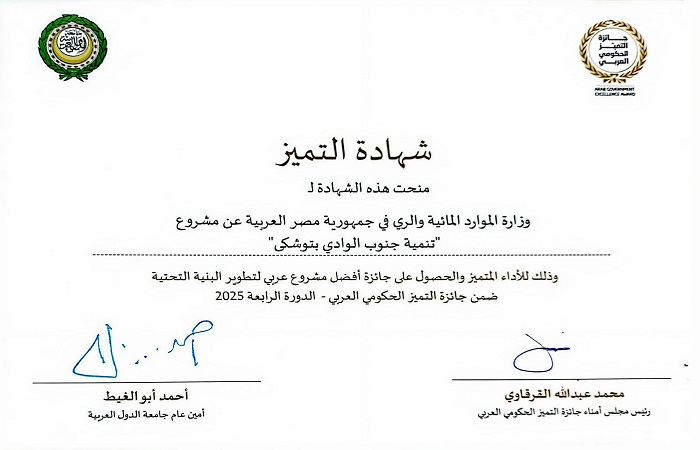

South Valley Development Project – Toshka
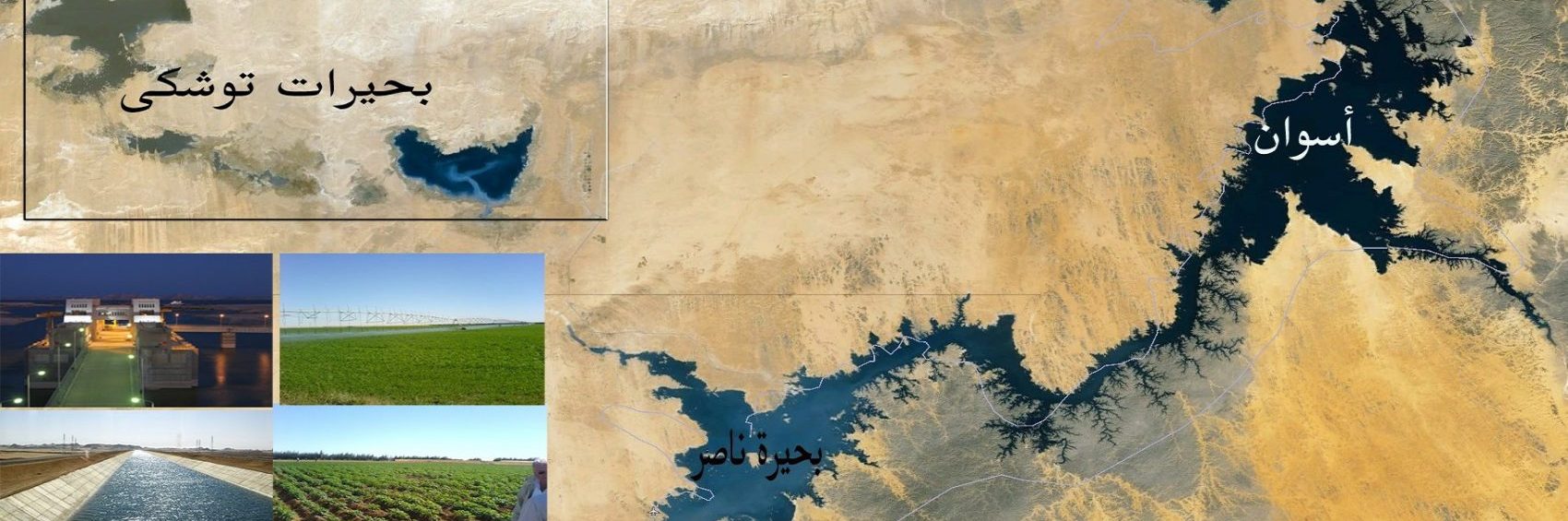
The Historical Significance of Toshka
– The name “Toshka” derives from the Nubian dialect, consisting of two parts: “Tosh,” which is the name of an aromatic medicinal plant (ghubeira) that grew abundantly in the valley, and “Ki,” meaning habitat or place. Thus, the name carries the meaning “the habitat of aromatic plants,” an early reference to the region’s agricultural potential.
The Project’s Origin and Evolution
– The dream began in 1996 with the aim of increasing the agricultural area. Then, in 1997, the project was included in the first national plan for horizontal expansion to reclaim approximately 3.4 million feddans, relying on:
• Nile River water via the Toshka spillway
• Groundwater
• Non-conventional water resources
– With the evolution of challenges and the needs of population growth, the vision was updated in 2017 to raise the targeted agricultural area to 10.4 million feddans, focusing on improving water use efficiency, relying on modern irrigation systems, and sustainably utilizing available resources.
– In 2020, by a decision from the political leadership, the project was revived to enter a new phase of effective implementation, based on unprecedented national integration between the Ministry of Water Resources and Irrigation, the Engineering Authority of the Armed Forces, and the National Service Projects Agency.
The Strategic Importance of Toshka Project
The project represents a fundamental pillar for achieving food security through
– Increasing the production of strategic crops
– Establishing new urban and agricultural communities in the South Valley
– Attracting local and international investments
– Enhancing Egypt’s competitive position in regional and global agricultural markets
Environmental Dimension of the Project
The Toshka project is based on principles of environmental sustainability through
– Using modern irrigation systems to rationalize water consumption
– Reducing water loss and carbon emissions
– Employing remote sensing technologies and satellite imagery
– Alignment with goals for adapting to climate change
Societal Dimension of the Project
– The project has contributed to providing tens of thousands of job opportunities
– Improving the living standards of Upper Egypt residents
– Supporting the establishment of integrated developmental communities
– Building national cadres in the fields of modern irrigation and agriculture
Economic Dimension of the Project
Toshka has achieved tangible economic returns through: –
– National investments exceeding 40 billion pounds until 2024
– Maximizing returns from water and land units
– Reducing dependence on importing strategic crops
– Transforming the region into a base for exporting medicinal and aromatic plants
– Planning, Innovation, and Resource Management
The project relied on
– Automatic control and measurement systems
– Real-time monitoring systems (Telemetry)
– Long-term management of water resources
The project also faced engineering and environmental challenges such as the rocky barrier and swelling soil, which were overcome with innovative engineering solutions
The Project’s Execution Status
– Total length of canals: 491 km
– Total reclaimed and cultivated area: 517 thousand feddans
– Final target: 720.5 thousand feddans
– Number of lifting stations: 19 stations
– Industrial works: more than 313 industrial works
Toshka… Results That Speak
The project has become a successful model for
– Sustainable development, contributing to
– Achieving food security
– Supporting agricultural exports
– Enhancing sustainable development goals (SDGs)
– Employing smart technologies under the umbrella of the second generation of the Egyptian irrigation system 2.0