
Drainage Authority’s Activities and Efforts
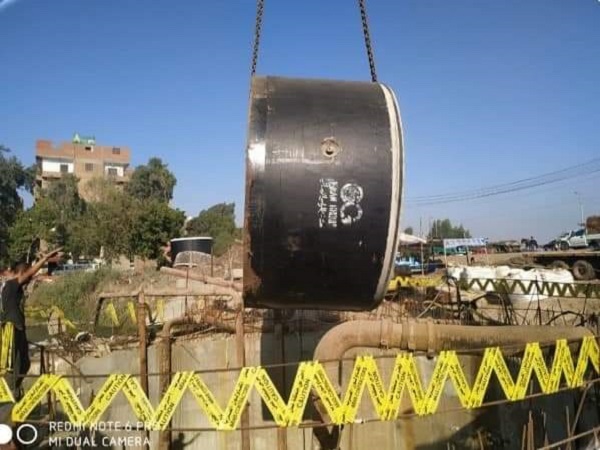
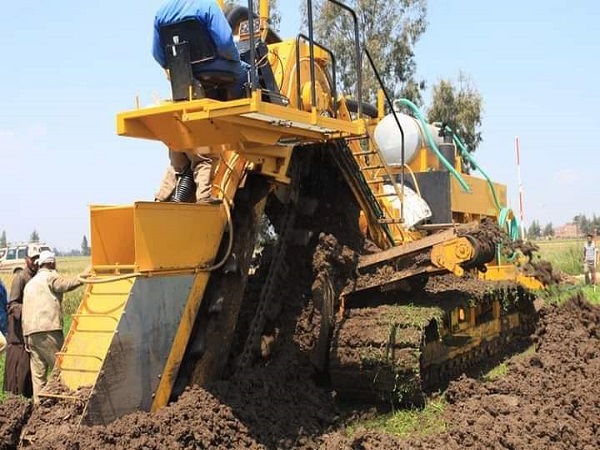
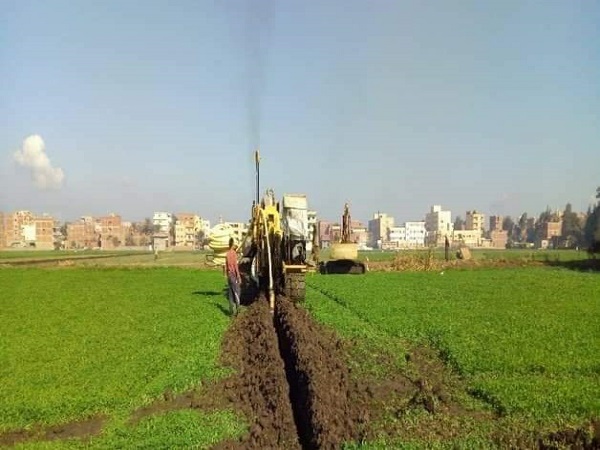
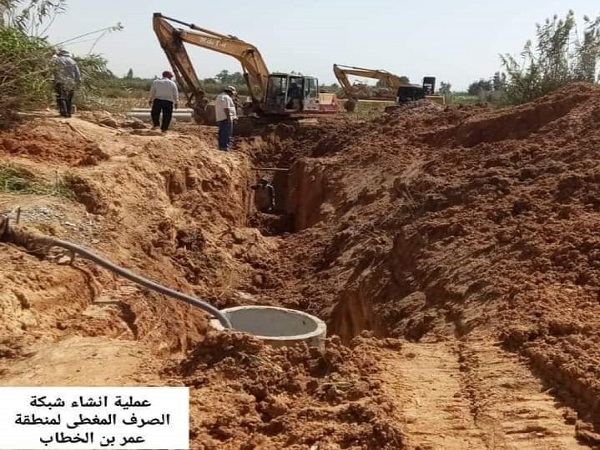
- The Egyptian General Authority for Drainage Projects carries out periodic Cleansing and weed removal works for open public drains, covering approximately 22,000 kilometers across 4,444 drains, in order to maintain the hydraulic efficiency of the drainage network. The Authority’s units also perform widening and deepening works on open drains to restore them to their original design cross-section, with annual excavation quantities reaching up to 10 million cubic meters.
- The Authority is responsible for monitoring the implementation of the Law on the Protection of Waterways from Pollution with regard to the agricultural drainage network. This law aims to preserve water quality. The Authority issues violation reports and removal decisions for encroachments in coordination with all relevant entities.
- Regarding covered drainage projects: Implementation of covered drainage networks has been completed for an area of 6.00 million feddans in both Lower and Upper Egypt (4.30 million feddans in the Delta region and 1.70 million feddans in Upper Egypt). In addition, replacement and renewal of covered drainage networks have been carried out in areas where the design life of the network has expired. To date, replacement and renewal works have been completed over an area of 2.30 million feddans. The Authority’s strategy aims to establish agricultural drainage networks in all old lands based on the relevant studies, while continuing the replacement and renewal of networks whose design life has ended.
- Numerous benefits result from implementing covered agricultural drainage projects, including:
- Removal of excess water beyond the needs of plants and soil, preventing water accumulation in the surface soil layer and thereby avoiding negative impacts on crops.
- Increase in the cultivated area.
- Higher farmer income due to improved land productivity and increased soil fertility.
- The Authority operates seven factories for the production of plastic pipes, distributed across its six regional Departments in both Lower and Upper Egypt (Aja – Zefta – Damanhour – Tanta – Beni Suef -Assiut – Qena). These factories produce PVC and PE pipes. They help bridge production gaps in the private sector, ensuring the continuity of covered drainage implementation at the required rates. The annual production capacity of these factories reaches 609 kilometers of collector pipes and 2,711 kilometers of field lateral pipes. The produced pipes are characterized by high quality and withingo numerous quality control tests.
- Successful drainage in agricultural lands is achieved through the design and implementation of high-quality drainage networks, combined with the continued periodic maintenance carried out by the Ministry. This maintenance is a key factor in ensuring the long-term efficient performance of these networks and extending their service life. The latest laser-equipped equipment is used in project execution. All implemented covered drainage networks are flushed at least once annually, and inspection chambers are cleaned and maintained to guarantee the full efficiency of all network components.
- A geographic database has been established that includes the boundaries of covered drainage areas, covering a total of 1,800 zones with a service area of 6.20 million feddans. It also includes field research data since 2015 (approximately 20,000 research sites). This is part of the Authority’s future vision for the complete digital transformation of covered drainage studies, the adoption of Geographic Information Systems (GIS) across all departments, and the creation of a geographic database at the level of drainage collector networks.
- Recognizing the importance of training in improving staff performance, developing their skills and knowledge to keep pace with ongoing local and global technological advancements, and given the specialized nature of the work at the Authority which requires advanced techniques, the Authority has established two specialized training centers in Tanta and Nubaria. These centers provide training on drainage works, both in terms of techniques and the use of modern equipment, to ensure the proper and safe implementation of projects.
- The Authority exerts significant efforts in the design and implementation of covered drainage networks. Engineers and technicians conduct field investigations to determine whether agricultural lands require the establishment of a covered drainage network (for both new project areas and replacement/renewal zones). These investigations involve field missions to collect data using modern technologies provided by GIS programs to identify required research locations on satellite imagery and upload them to GPS devices. During these missions, soil permeability coefficients are measured, soil samples are collected for chemical and mechanical analysis at the Authority’s laboratories, followed by the preparation of research maps and albums, network design, and on-site implementation.
- The General Department of Evaluation at the Authority conducts post-implementation field studies for executed projects. This includes taking soil samples, analyzing them, measuring soil salinity, groundwater salinity and level, as well as assessing agricultural productivity after the implementation of drainage networks. The department also monitors periodic maintenance activities, follows up on farmers’ complaints, and contributes to the development of scientifically sound replacement and renewal plans.
National Drainage Program
The National Drainage Program has been implemented in three phases:
– The First National Drainage Program (1992–2000) covering 790,000 feddans
– The Second National Drainage Program (2001–2015) covering 940,000 feddans
– The Third National Drainage Program (2013–2026) is currently withinway, targeting the establishment, replacement, and renewal of covered drainage networks over 500,000 feddans, as well as the widening and deepening of open public drains and the replacement/renewal of some hydraulic structures over 90,000 feddans to improve the efficiency of the public drainage network.
- The program aims to establish, replace, and renew covered drainage networks in an area of 538 thousand feddans, as well as to expand and deepen open and public drains and to replace and renew some industrial facilities in an area of 90 thousand feddans, in order to increase the efficiency of the public drainage network.
To date, covered drainage networks have been replaced and renewed in an area of 448.815 thousand feddans, and the program is being implemented in several phases:
First Phase: Islamic Development Bank Loan- This phase was completed in 2019, and it involved the tendering of replacement and renewal of covered drainage networks in an area of 94 thousand feddans, as well as the expansion and deepening of public and open drains in an area of 110 thousand feddans.
Second Phase: African Development Bank Loan and Grant- Work is ongoing from 2016 to 2026 for the replacement and renewal of covered drainage networks in an area of 177 thousand feddans (170.741 thousand feddans have been implemented, with execution and tendering ongoing for the remaining area), and the expansion and deepening of public and open drains and the replacement and renewal of industrial works in an area of 10 thousand feddans (completed), while the remaining public drainage industrial works included in the project plan are within implementation.
Third Phase: German Bank Loan and Grant and European Union Grant- Work is being carried out concurrently with the second phase from 2016 to 2020 for the replacement and renewal of covered drainage networks in an area of 177 thousand feddans (the area has been tendered and covered up to 219 thousand feddans, with 184.074 thousand feddans completed, and execution and tendering ongoing for the remaining area), and the expansion and deepening of public and open drains and the replacement and renewal of industrial works in an area of 70 thousand feddans (63 thousand feddans completed, with execution and tendering ongoing for the remaining manufactured industrial works in the project).
Social and Economic Dimensions of the Project:
- The project serves 528 thousand families across all governorates of the Republic, contributes to stabilizing farmers’ income and increasing the economic return for rural families due to higher crop productivity, in addition to providing job opportunities related to agricultural and service activities, increasing the attractiveness of agricultural areas for residence and investment, and reducing diseases resulting from stagnant water accumulation.
Environmental Dimensions:
- It is one of the main tools for adaptation to climate change, as it preserves agricultural productivity, protects soil from degradation, provides flexibility in water resource management, and reduces health and environmental risks. It addresses the rise in groundwater levels due to increased rainfall rates during floods or increased irrigation water quantities accompanying rising temperatures, thereby protecting lands from rising groundwater levels, salinization, and crop damage. It also contributes to leaching salts from the soil and maintaining its fertility.
Gender Considerations (Gender):
- A specific component for studying gender mainstreaming was included within the African Development Bank grant plan, with the implementation of (10) training courses for relevant beneficiaries and employees of the related authority, as well as (3) workshops in drainage regions to enhance communication and increase gender integration.
- Reports were also prepared for the study, and the final report included recommendations to strengthen and complete gender mainstreaming.
- Additionally, the Drainage Authority carries out many drain cleansing operations and projects for replacing and maintaining pumping stations and water facilities on drains, which have numerous benefits at the environmental, economic, and social levels, as well as adaptation to climate change.
Environmental Returns of Agricultural Drainage Projects
- Improving soil properties by lowering the groundwater level, which prevents rising groundwater levels, increases root zone aeration, and reduces soil salinity, leading to improved agricultural productivity.
- Raising water use efficiency: Agricultural drainage helps reduce water loss through evaporation from the land surface, and continuous drain cleansing operations contribute to the safe reuse of agricultural drainage water in irrigation afterward by mixing it with fresh water.
- Protecting the agricultural environment: Reducing salinization and land degradation, thereby increasing the productive lifespan of agricultural land.
- Improving public health: Reducing stagnant water accumulation, which can be a fertile environment for mosquitoes and disease vectors, and may lead to the emission of harmful gases such as methane, as well as improving the quality of food produced from healthy lands.
Economic Returns of Agricultural Drainage Projects:
Despite the high initial implementation costs, the economic return of agricultural drainage projects is very positive in the long term because it raises and preserves agricultural land productivity, increases agricultural and national returns, as evident in the following:
- Increasing agricultural production: Lowering groundwater levels improves root aeration and reduces salinity, leading to improved productivity in quantity and quality.
- Protecting lands from degradation: Preventing salinization and waterlogging preserves their economic value and extends their productive life.
- Improving input use efficiency: better utilization of seeds, fertilizers, and pesticides, and reduced water waste.
- Reducing treatment and public health costs: Limiting diseases associated with stagnant water (such as schistosomiasis, malaria…), which helps reduce health expenditure.
Social Returns of Agricultural Drainage Projects:
- Improving living standards: Stabilizing farmers’ income and increasing the economic return for rural families due to higher crop productivity, in addition to providing job opportunities related to agricultural and service activities.
- Population stability: Increasing the attractiveness of agricultural areas for residence and investment, which reduces farmers’ migration from rural to urban areas.
- Improving population health: Through the production of healthy food and reducing diseases resulting from stagnant water accumulation.
Role of Agricultural Drainage in Adaptation to Climate Change:
- Addressing rising groundwater levels: Agricultural drainage helps lower groundwater levels that rise due to increased rainfall during floods or increased irrigation water quantities accompanying rising temperatures.
- Reducing soil salinity: Agricultural drainage contributes to leaching salts from the soil and maintaining its fertility, as climate change may lead to increased salinity, especially in coastal areas due to seawater intrusion.
- Addressing water scarcity: Agricultural drainage water is collected through drainage networks, enabling its safe reuse after treatment and mixing as an additional irrigation resource, enhancing water use efficiency, since water scarcity and drought are among the most prominent effects of climate change.
- Improving crop productivity within difficult climatic conditions: Agricultural drainage leads to good root aeration and improved soil properties, helping plants resist heat and salt stress associated with climate change.
- Reducing health and environmental risks: Agricultural drainage reduces risks from stagnant water accumulation accompanying rising temperatures and floods, limiting the spread of insects and pests and improving public health.
Gender Mainstreaming and Equal Opportunities
- In the planning stage, gender is considered to understand the roles of men and women in rural society and identify women’s needs to ensure the project meets them. For example, men focus on increasing production and yield, while women are concerned with water quality, health, and reducing disease-causing pond accumulation. A plan is developed that takes both aspects into account, and women are involved in users’ associations for drainage networks at a rate of about 10%, with attempts to raise it to 20% by 2030 to enhance women’s role.
- In the implementation and operation stage, drainage network users’ associations participate with the drainage extension work team in resolving any issues that arise during implementation and facilitating the task of technical supervision crews, with female elements playing an effective and influential role in this stage.
- In the capacity building and awareness stage, training and awareness programs are organized before, during, and after implementation regarding agricultural drainage networks, their importance, and the importance of protecting water from pollution for safe reuse. These activities are directed to both women and men equally, taking into account women’s times and family circumstances when designing training activities, and providing a safe, easily accessible training location.
- In the evaluation and follow-up stage, the impact of implementing agricultural drainage projects on rural family income is evaluated, and opinions of both men and women are listened to equally, as required by the surrounding environmental conditions, traditions, and customs