
Water Users Associations
What are Water Users Associations?
– Water Users Associations and Councils are local entities that bring together beneficiaries and farmers at the levels of branch canals (mesqas), ditches, drains, and government groundwater wells. They aim to activate community participation between water users and the Ministry of Water Resources and Irrigation in the management, operation, and maintenance of irrigation and drainage systems, ensuring optimal use of water, protection of water resources, and rationalization of consumption. The Ministry is the official body responsible for supervising these associations, approving their basic systems, and endorsing their programs.
Main Tasks and Responsibilities of Water Users Associations:
– Maintaining the cleanliness of canals and branch canals, dredging them, removing weeds, and developing them.
– Managing and distributing water fairly among beneficiaries.
– Supporting the transition to modern on-farm irrigation systems (improved and advanced) both technically and financially.
– Resolving disputes among beneficiaries in cooperation with relevant authorities.
– Operating and maintaining modern irrigation systems and monitoring the status of irrigation and drainage.
– Setting priorities for the maintenance of irrigation and drainage networks based on needs and available budgets.
– Representing water users before competent authorities.
– Raising awareness about rationalizing water use and protecting canals and branch canals from pollution.
– Organizing monthly meetings to review operation, maintenance, and financial status.
– Preparing an action plan for the association based on actual problems (irrigation, drainage, agriculture, environment).
– Participating in preventing encroachments and implementing removal decisions related to obstructions in irrigation and drainage paths.
Environmental Dimensions of Forming the Associations:
– Protecting waterways from encroachments and pollution.
– Improving the efficiency of water distribution and reducing losses
– Supporting waste recycling projects and reducing pollution in canals and drains, and promoting the application of modern irrigation to contribute to water conservation and soil preservation.
Social Dimension of Forming the Associations:
– Enhancing community participation in water management instead of complete reliance on the state.
– peacefully and systematically resolving disputes among farmers.
– Raising environmental awareness through seminars and workshops in villages.
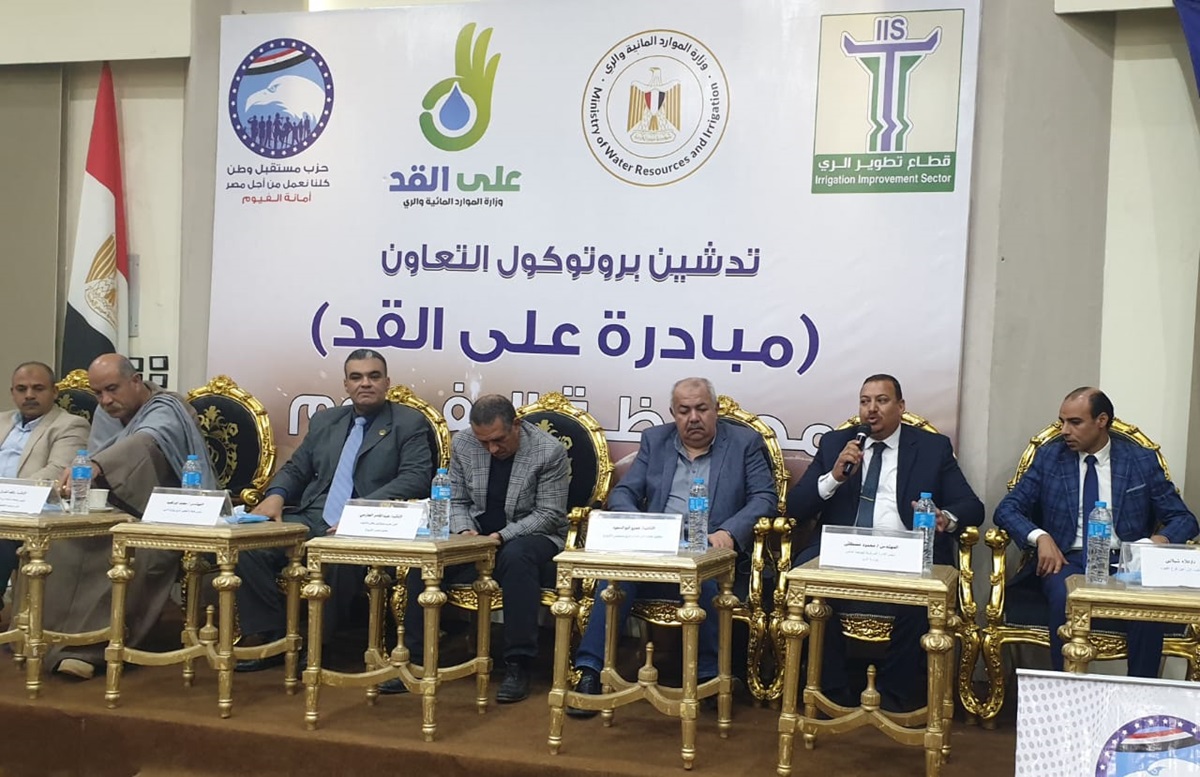
– Maintaining continuous communication with government entities (irrigation, environment, agriculture), and unifying local community efforts to support the national campaign for water rationalization “Ala Al-Qad” and promoting responsible behaviors.
Economic Dimension of Forming Water Users Associations:
– Improving irrigation efficiency.
– leading to increased agricultural productivity and reduced costs.
– Supporting recycling projects to generate additional income for the association.
– Providing technical and financial support to farmers for transitioning to modern irrigation.
– Organizing the association’s financial resources through clear accounting systems, and reducing losses resulting from water distribution problems or encroachments.
Gender Considerations and Women’s Integration in Water Users Associations:
– Women play a pivotal role in managing water resources at the household and community levels. Therefore, their participation in the associations is supported through:
– Forming committees chaired by women in some associations to raise environmental awareness among women.
– Addressing issues specific to women within the association and enhancing their participation.
– Training women on utilizing water hyacinth (Nile rose) in handicrafts and textiles to generate economic income.
– Raising awareness about not dumping garbage and its impact on public health and water quality.
– Participating in garbage collection, sorting, and recycling projects to achieve economic returns.
– Implementing a modern irrigation pilot on one feddan in old lands and disseminating the results.
– Honoring one of the participating women in the national competition “Hafiz Alayha Talaqiha” (Preserve It and You’ll Find It), who applied a modern irrigation experiment on one feddan in clay old lands within the Kom Al-Rahib branch association in Minya.
– Encouraging farmers to adopt modern irrigation and spreading the experience in neighboring villages.