Nile Water Affairs Sector Activities
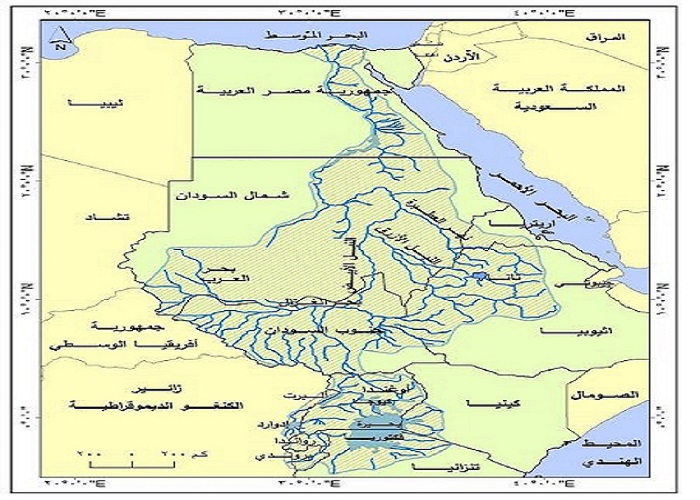
The Nile Water Affairs Sector is one of the pivotal sectors in the Ministry, as it represents Egypt in managing the Nile River file. It oversees the follow-up and implementation of agreements related to Nile waters, aspects of bilateral cooperation with Nile Basin countries, as well as the implementation and follow-up of development projects in Nile Basin countries. It conducts hydrometeorological studies related to Nile waters, collects rainfall and discharge data to forecast river inflows and support decision-makers. The sector serves as Egypt’s first line of defense for national water security, participating in international conferences and representing Egypt in regional forums. It coordinates with other ministry sectors to ensure integrated water policies and provides technical support to political leadership through reports and strategic studies, combining technical and diplomatic efforts to safeguard Egypt’s water rights amid regional and international challenges.
Below is an overview of the most important activities and tasks of the Nile Water Affairs Sector:
1. Development of Water Modeling and Scenario Analysis:
- Operation and management of advanced mathematical models to study hydrological phenomena and evaluate the impact of water projects in Nile Basin countries on Egyptian water security.
- Preparation of multiple technical scenarios to address ongoing or planned projects, ensuring rational use and maximization of benefits from water resources.
- Forecasting river inflows in the short and long term.
- Development of decision support systems linked to model outputs to provide scientific recommendations to decision-makers regarding regional projects and their impacts.
- Participation in the work of the committee for increasing the discharge capacity of the Toshka Spillway.
- Verification of outputs from high-accuracy rainfall models such as ETA and WRF, and development of NFS system outputs.
- Support for the establishment and operation of forecasting centers in South Sudan and the Democratic Republic of Congo.
- Introduction and operation of a new forecasting model (MPAS) within the forecasting center, contributing to improved accuracy of weather and rainfall forecasts over Nile Basin countries.
- Supervision of conducting technical studies and applied research on current and expected changes in Nile Basin water resources due to ongoing and planned development projects.
- Development of operational plans, programs, and implementation procedures in line with the Ministry’s strategic plan.
- Conducting technical analyses of hydrological studies related to the Nile River Basin.
- Supervision of preparing periodic reports on the hydrological characteristics of the Nile River, issuing periodic bulletins, and related databases.
- Preparation of operating scenarios for the High Dam and Toshka Spillway based on hydrological forecasting results.
- Coordination with specialized international organizations in the field of hydrology for experience exchange.
2. Enhancing Monitoring and Technical Analysis Capabilities:
- Supervision of collecting and recording Nile water levels and discharges from various measurement stations along the Nile course and its different basins throughout the year.
- Monitoring changes in water use in the Nile River Basin through the establishment of systems to track changes in river inflows and lakes.
- Collection and analysis of hydrometeorological monitoring data from various sites along the Nile River and its basins, including water levels, discharges, and rainfall data from Basin countries.
- Estimation of the natural inflow of the Nile River throughout the year.
- Issuing periodic bulletins recording the river’s hydrometeorological data.
- Issuing Nile Basin encyclopedias recording the river’s hydrometeorological data (levels – discharges – rainfall etc…).
- Providing all data, information, and studies related to Nile River Basin water resources in an accurate and rapid manner using geographic information systems and remote sensing.
- Periodic monitoring of dams, calculation of dam lake levels, comparison with actual levels to obtain the most accurate level, and calculation of surface area and storage volume, in addition to monitoring land cover, land uses, estimation of water consumptions, agricultural areas, and rainfall quantities.
- Preparation of analytical reports on the impacts of climate changes on water inflows and proposed adaptation plans.
3. Supporting Decision-Makers and Regional Coordination:
- Submitting periodic reports based on the latest results and models regarding the current situation and future variables in the Nile Basin.
- Issuing technical recommendations on projects intended for implementation by Nile Basin countries on the river, as well as preparing possible scenarios for projects planned in the Nile Basin.
- Providing technical opinion in negotiations regarding regional projects and supporting the Egyptian position in international forums.
Below is a review of the sector’s activities at the regional and international levels
First: Sector activities at the regional level:
- Relations of cooperation between Egypt and the Nile Basin countries constitute a fundamental pillar in the directions of Egyptian foreign policy, as Egypt has attached great importance to strengthening bilateral partnerships with the Basin countries through development projects that achieve direct benefits for their peoples, in addition to regional cooperation at the level of the Nile Basin as a whole, in recognition of the importance of this great river as a shared life that unites its peoples in a common destiny.
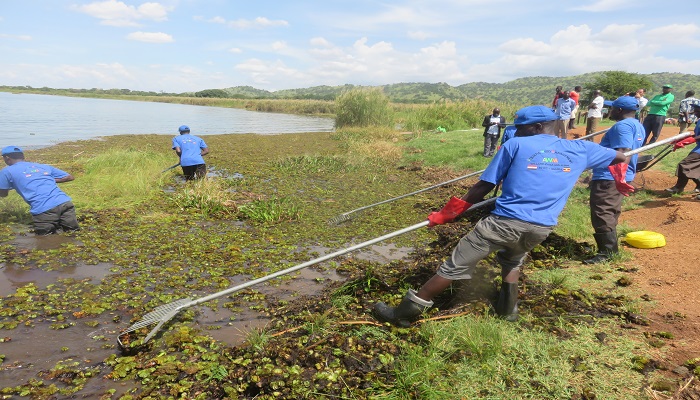
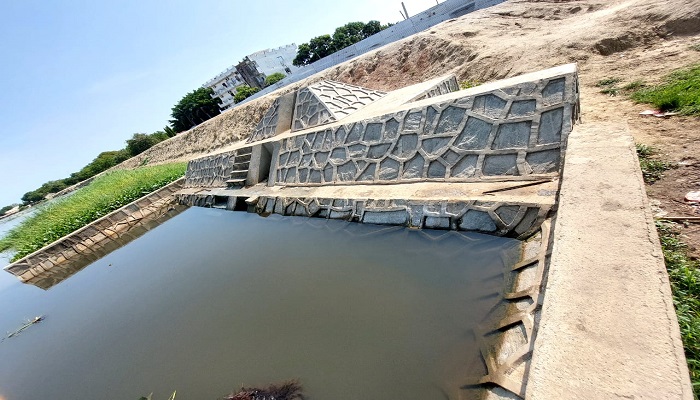
- In this context, the sector has implemented many projects including control of floating and submerged aquatic weeds in waterways, river training to improve river navigation and facilitate trade and movement, as well as projects for drilling and equipping groundwater wells to provide pure drinking water, in addition to constructing dams for rainwater harvesting and valley reservoirs to maximize the benefit from rainwater, as well as preventive projects to mitigate the negative effects and risks of floods, rehabilitation of measurement stations to provide the necessary hydrological data, and establishment of ports for fishing and trade on riverbanks. The sector has made great efforts in the field of human capacity building through training of technical and professional cadres, and dispatching Egyptian experts to provide technical support in the field of water resources as well as assistance in preparing national water plans, which reflects Egypt’s strategic vision for achieving comprehensive development. The following illustrates the areas of bilateral cooperation with Nile Basin countries:
Republic of Uganda:
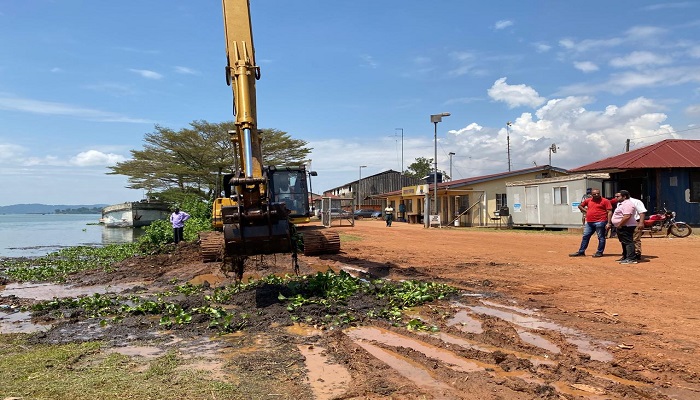
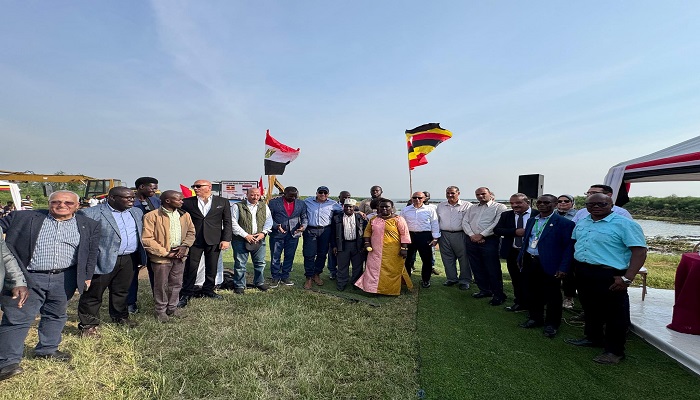
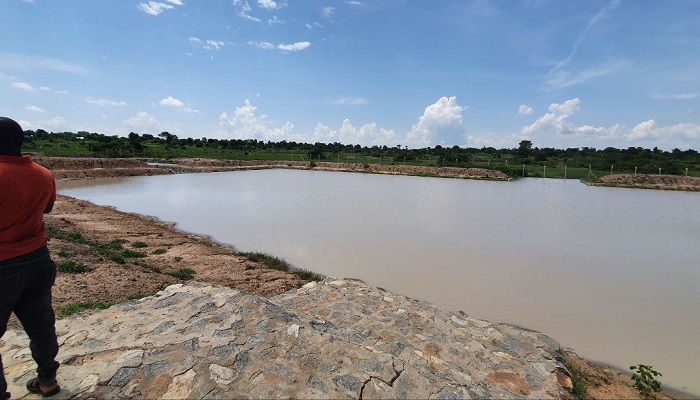
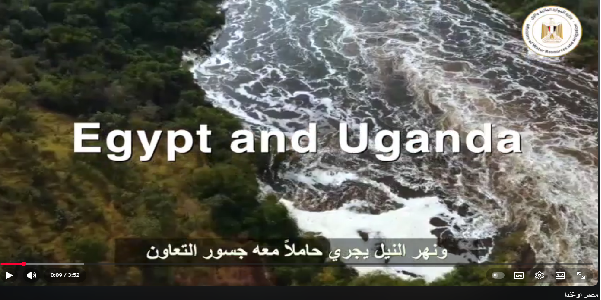
- The Egyptian-Ugandan project for controlling aquatic weeds in the Great Lakes with the aim of enhancing cooperation in the field of water resources by removing weeds from lake outlets to reduce water level rise. The project was launched in 1999 in response to an urgent call from Uganda to confront floods resulting from increased rainfall in the tropical lakes region, which caused the displacement of thousands of residents around Lake Kyoga. Its achievements contributed to improving citizens’ lives and supporting economic development through activating navigation and fisheries, establishing river ports such as Gaba in Kampala and Masese in Jinja, in addition to building rainwater harvesting dams to provide drinking water to remote areas, and establishing new fish farms. The project has been implemented over five phases during 25 years.
- The sixth phase of the project is currently being implemented, with the relevant agreement signed in 2023, aiming to complete periodic control works for aquatic weeds at the outlets of the tropical lakes, in addition to developing the “Kamonga” river port on Lake Victoria and establishing a fish market at the port.
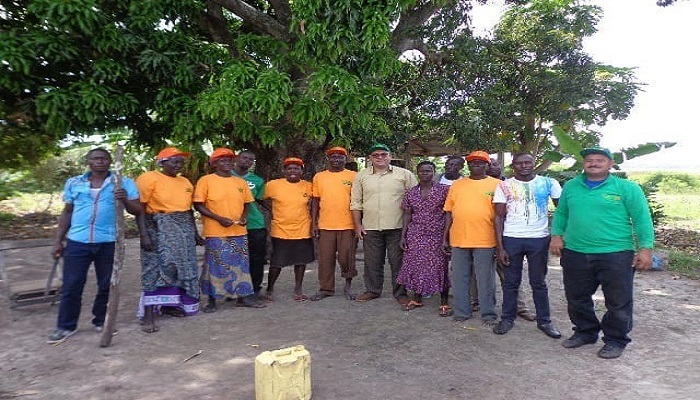
- Implementation of an applied pilot project for aquatic weed control in cooperation with the Ugandan Ministry of Agriculture, manually in two leading areas on Lakes Kyoga and Albert, with the aim of finding a sustainable solution to the problem of the spread of these weeds. The project provided innovative means for beneficiaries to benefit from the removed weeds through biogas production for cooking use as well as organic fertilizer production to support agricultural activities and improve living standards.
- Signing of a memorandum of understanding with the Ugandan Ministry of Water and Environment in 2010 to implement development projects aimed at enhancing water security and capacity building. These projects included drilling 75 groundwater wells to provide potable water to deprived areas, in addition to constructing 5 rainwater harvesting dams for use in drinking and domestic purposes, as well as focusing on training Ugandan technical cadres and transferring Egyptian expertise in the field of water resources.
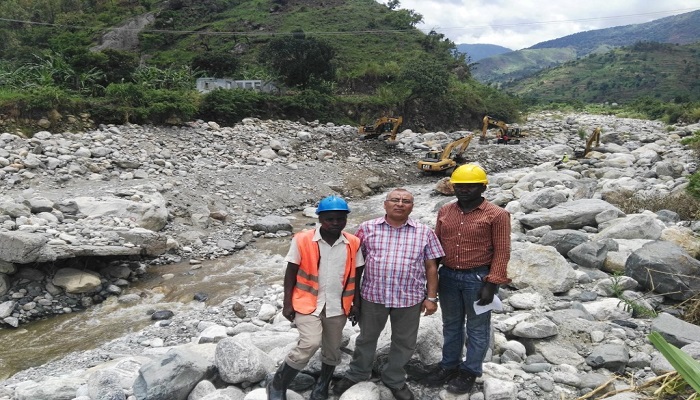
- Signing of a memorandum of understanding between Egypt and Uganda in 2016 to implement a development project in Kasese District, which has suffered for decades from recurrent flood waves, with the aim of mitigating flood risks, protecting lives and property, and enhancing community resilience to disasters. Preparations for the second phase of the project are currently underway.
- Signing of a memorandum of understanding for a water resources management project in 2025 with the aim of ensuring the provision of pure and sustainable drinking water, in addition to capacity building through short-term training programs. The memorandum includes the construction of 5 water tanks and the development of 53 solar-powered groundwater wells equipped with distribution networks, in addition to drilling 50 new wells.
Republic of South Sudan
- Project for clearing waterways in the Bahr El Ghazal Basin to improve living, health, and environmental conditions, reduce flood risks, limit migration, activate navigation, and enhance fishing. The project’s objective is to remove aquatic weeds and plants that have overrun the Bahr El Ghazal River, causing inability to fish and loss of enormous fish wealth due to water stagnation in the channel. The project had a significant impact in reducing flood risks, reclaiming lands, operating river navigation, removing all difficulties and obstacles, facilitating citizens’ movement, easing fishing operations and utilizing fish resources, and reducing population migration due to floods.
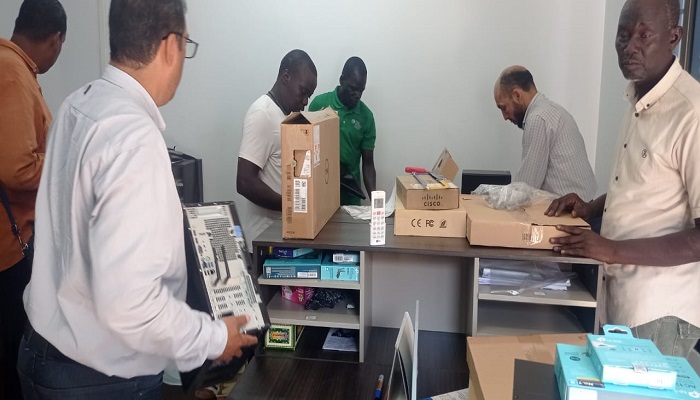
- Establishment of a center for forecasting climate changes to provide a dedicated system for hydrological and meteorological forecasts for South Sudan, supplying the necessary data for technical studies and functioning as an early warning system for rain and flood hazards in the country.
- Establishment of a water quality analysis laboratory, which currently performs all analyses to monitor water quality on behalf of government entities in South Sudan as an accredited laboratory.
- Establishment of 25 solar-powered groundwater stations, with additional stations under implementation to provide pure drinking water to citizens.
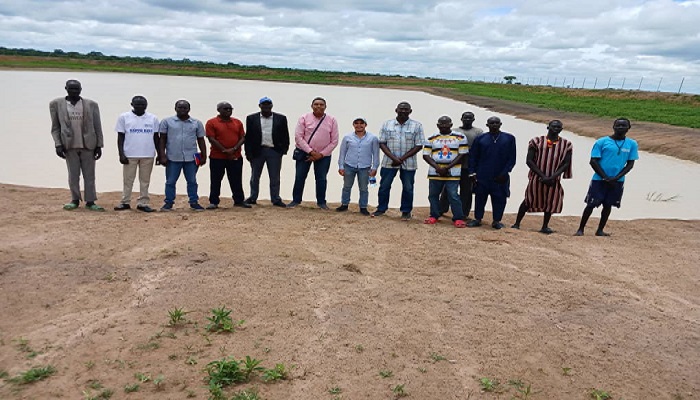
- Construction of two rainwater harvesting dams in Warrap State, each with a capacity of 30,000 m³, aimed at benefiting from rainwater during dry periods.
- Establishment of two river ports in the cities of Wau and Kwajok to connect major cities and villages by navigation.
- Establishment of three gauging stations for measuring levels and discharges on the Bahr El Jebel (Nimule -Bor– Mongalla), jointly managed by Egypt and South Sudan, with each station equipped with a drinking water facility to serve local communities.
Republic of Sudan
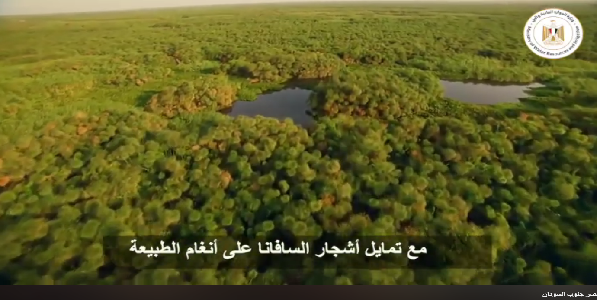
- Bilateral cooperation between Egypt and Sudan in the field of water resources is one of the most important pillars of water security, and the Permanent Joint Technical Commission for Nile Waters is the main mechanism for cooperation in the field of water resources and irrigation.
- The sector represents the Egyptian side in the Permanent Joint Technical Commission for Nile Waters, as the Commission is responsible for full coordination between the two countries regarding the Nile water file, including the operation of dams in Sudan and the High Dam in Egypt, in addition to data exchange, aquatic weed control, training activities, and capacity building.
- Drilling of 10 groundwater wells in Darfur State was implemented during 2007-2009.
Democratic Republic of the Congo
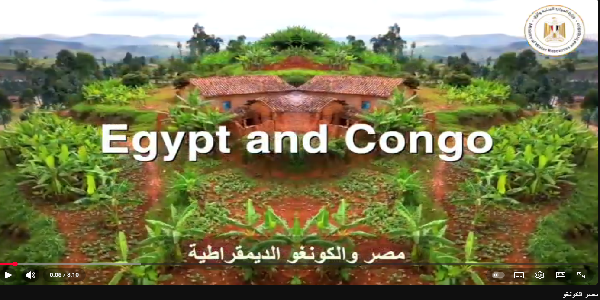
- Signing of a cooperation protocol with Congo in 2012 to implement the Integrated Water Resources Management project, including drilling groundwater wells and exchanging expertise in agriculture, irrigation, and livestock raising.
- Establishment of a center for forecasting climate changes, rainfall, and providing the necessary data for technical studies, functioning as an early warning system for rain and flood hazards in the country. The forecasting center was inaugurated in July 2021, achieving benefit from information technology and data to study the effects of sudden climate changes. Egypt also trained Congolese officials responsible for operating the center.
- Implementation of training programs and capacity building.
United Republic of Tanzania
- Implementation of drilling 30 wells under an Egyptian grant; completion of drilling 30 groundwater wells in 2009 through one of the national companies, using modern technology in many of the implemented groundwater wells with solar-powered pumps.
- Currently ongoing completion of the remaining activities through a new cooperation agreement for drilling 30 groundwater wells and constructing 2 rainwater harvesting dams.
Republic of Kenya
- Implementation of 180 groundwater wells in arid areas of Kenya through an Egyptian grant during the period 2003-2009.
- Ongoing signing of a cooperation agreement to implement projects for constructing rainwater harvesting dams and drilling groundwater wells to provide pure drinking water in remote areas from water sources, the rehabilitation project for the upper areas of the Sio Malaba Malakisi Basin in Kenya, and a project to transfer Egyptian expertise in modern irrigation systems, in addition to focusing on training and capacity building.
Republic of Burundi
- Within the framework of strengthening cooperation with Burundi in the fields of technical support and studies, technical studies are prepared according to the needs of Basin countries, alongside implementation of training activities and capacity building.
Republic of Rwanda
- Signing of a memorandum of understanding to implement the “Water Resources Management” project, which includes a number of development projects meeting Rwandan side needs, including a project for protecting water catchments in Rwanda, a project for drilling groundwater wells to provide pure drinking water to citizens in remote areas from water sources, construction of rainwater harvesting dams, as well as training, capacity building, and exchange of expertise in all fields related to water resources.
Second: Sector Activities at the International Level:
World Water Council (WWC):
- Egypt has been honored with membership in the Governors’ Council of the World Water Council (WWC).
- Egypt participated in numerous activities and events during the 10th World Water Forum held in Bali, Indonesia, from May 19-25, 2024, including organizing and managing a session titled “Transboundary and Multi-Sectoral Dialogue for Peace and Resilience in Water,” and presenting an illustrative overview of bilateral cooperation projects with Nile Basin countries to highlight the state’s efforts in supporting brothers in the Nile Basin.
- Egypt is also participating in the preparations for the 11th World Water Forum, scheduled to be held in the Kingdom of Saudi Arabia in March 2027, through membership in the International Steering Committee (ISC) and participation in the Thematic Process working groups, thereby enhancing its contribution to shaping the forum’s priorities and themes.
World Meteorological Organization (WMO):
- The Ministry (Head of the Nile Water Affairs Sector) represents Egypt as the hydrological advisor to the World Meteorological Organization (WMO) and contributes to the development of international policies related to water resources management and hydrological forecasting.
- The African Hydrological Conference was organized in cooperation with the Organization on the sidelines of Cairo Water Week 2024, reflecting Egypt’s prestigious position and its scientific and technical role at both regional and international levels.
United Nations Educational, Scientific and Cultural Organization (UNESCO):
- The Ministry leads the third working group concerned with Bridging the Data-Knowledge Gap within UNESCO activities, with the aim of enhancing integration between data and knowledge in the field of water resources management.
African Ministers’ Council on Water (AMCOW):
- Egypt assumed the presidency of the African Ministers’ Council on Water (AMCOW) for two years (2023–2025), which strengthens Egypt’s role in leading African efforts toward achieving water security and sustainable development.
African Water Facility (AWF):
- Egypt currently holds the presidency of the African Water Facility (AWF), where the Ministry follows up through the Facility on the implementation of the Council’s programs and works to mobilize the necessary financial resources to finance future water projects on the continent, thereby enhancing Egypt’s leading role in African water action.
Union for the Mediterranean (U f M):
- The Ministry represents the Arab Republic of Egypt as the official focal point for the Union for the Mediterranean’s regional platform in the field of water and actively participates in formulating joint initiatives and projects.
Inter-Islamic Network on Water Resources Development and Management (INWRDAM):
- An agreement was signed to host the branch office of the Inter-Islamic Network on Water Resources Development and Management (INWRDAM) in Cairo, and Egypt actively participates in the Regional Steering Committee of the Water-Energy-Food-Environment (WEFE Nexus) Community of Practice.
- Engineering designs and technical studies were prepared for the rainwater harvesting project in Wadi Feiran area in South Sinai, which applies the WEFE Nexus concept, and the 38th Conference of the Network was held in Cairo in October 2025.
Islamic Conference of Ministers Responsible for Water in Member States of the Organization of Islamic Cooperation (OIC):
- Egypt assumed the presidency of the fourth session of the Islamic Conference of Water Ministers since 2018, during which it worked to support the implementation of the Organization’s vision on water and enhance regional cooperation to achieve water security and confront challenges of scarcity and climate change. Egypt then handed over the presidency to the Kingdom of Saudi Arabia during the fifth session of the Islamic Conference of Water Ministers held in Jeddah from October 20-22, 2025, under the slogan “From Vision to Impact.”
Arab Ministerial Water Council:
- Egypt is a key and active member of the Arab Ministerial Water Council and participates in implementing the executive plan of the Arab Water Security Strategy 2030.
- It also contributed to restoring effective Arab presence in global water forums and hosted the ministerial meeting of the Supreme Committee of Arab Ministers of Water and Agriculture in Cairo in October 2025, as part of efforts to enhance regional water security in cooperation with Arab and international organizations.
Green Climate Fund (GCF):
- The Ministry is currently completing procedures for its accreditation as a national implementing entity with the Green Climate Fund (GCF), following the issuance by the Ministry of Environment (the national designated authority – NDA) of a nomination letter for the Ministry of Water Resources and Irrigation to obtain accreditation in July 2025. This represents a strategic achievement that opens the door to financing and implementing climate change adaptation projects in Egypt. The Ministry has prepared and coordinated all required documents and policies, while maintaining close cooperation with Fund officials to follow up on implementation steps, reflecting the Ministry’s full readiness and fulfillment of accreditation requirements.
Below is a review of the sector’s activities in the fields of training and capacity building at local, regional, and international levels.
Status of Preparation and Development of Cadres in the Ministry and its Units:
- The Nile Water Affairs Sector is one of the most important sectors whose role is not limited to managing the Nile Basin file only, but extends to being a fundamental pillar in developing human cadres and qualifying them to face future water challenges, through specialized training programs aimed at raising the efficiency of engineers, technicians, and administrators, with a focus on introducing modern technology into work such as geographic information systems, remote sensing, hydrological models, and others. These efforts come within the framework of a comprehensive strategy to build a new generation of experts capable of efficiently managing water resources, dealing with climate changes, the continuous increase in water demand, and regional challenges in the field of water resources.
First: At the Local Level:
- The sector works on preparing and implementing specialized training programs targeting all cadres within the Ministry, not limited to engineers of the Nile Water Affairs Sector only, but extending to include representatives of various related sectors and ministries.
- Among the most prominent of these programs is the organization of connected training courses to introduce the Water-Energy-Food-Environment Nexus (WEFE NEXUS) approach, explain its importance and various financing methods to integrate investments across sectors, in addition to introducing participants to relevant performance indicators, alongside implementing training programs to build young technical capacities in the fields of climate forecasting, basin management, integrated water resources management, and advanced training programs in mathematical modeling, geographic information systems, remote sensing, and scenario analysis, which enhances the ability to support decision-making in water resources management.
- The sector also focuses on developing administrative and leadership skills for employees by nominating cadres to join leadership and management programs organized through national entities, such as the anti-corruption program of the Administrative Control Authority, the National Leadership Development Strategy program of the National Council for Training and Strategic Leadership, and other important courses aimed at preparing future leaders capable of bearing responsibility.
- In this context, a number of sector representatives participated in the “Second Generation Leaders Competition” adopted by the Ministry, with the sector keen to provide opportunities for cadres to participate in the system of preparing leaderships within the Ministry, integrating them into institutional development and restructuring plans, ensuring the availability of a second tier of qualified leaders capable of bearing responsibility in the future.
- The sector also holds scientific and introductory seminars on modern and vital topics such as green hydrogen, circular economy, water diplomacy, and other topics that reflect the sector’s alignment with contemporary global trends in water resources management and sustainable development, and contribute to raising technical awareness within the Ministry and at the national level.
Second: Regional Level (Nile Basin Countries and African Countries):
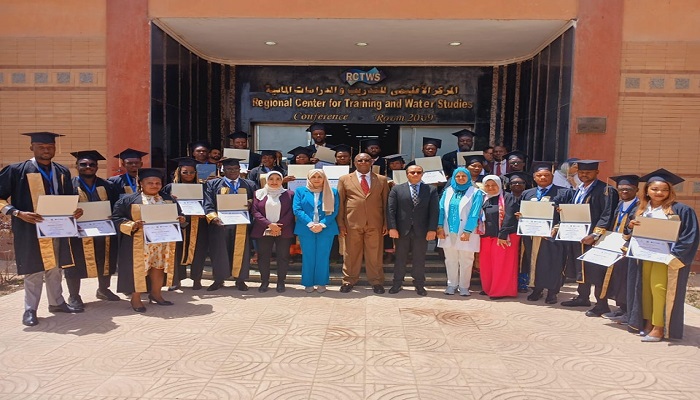
- The sector organizes annual training courses with Nile Basin countries, with trainees from a number of African countries attending, with the aim of transferring Egyptian expertise in the fields of planning and management of water resources, assisting in preparing national water plans, and supporting the application of integrated water resources planning methodology.
- African cadres are also trained on methods of regional coordination and cooperation to ensure optimal use of water, which contributes to enhancing partnership with Nile Basin countries and African countries, and raising the efficiency of technical cadres in the region.
- The sector also undertakes the training and preparation of seconded engineers to work in Egyptian irrigation administrations in Sudan, South Sudan, and Uganda, ensuring their technical and administrative readiness to perform their duties and enhancing Egypt’s role in supporting water development projects in these countries.
- Thus, the sector contributes to improving regional capacity to confront water challenges and strengthening channels of continuous technical cooperation with Nile Basin countries through capacity building programs and ongoing exchange of expertise.
Third: At the International Level:
- The sector continuously coordinates with regional and international organizations that organize specialized workshops and training courses, enabling sector and Ministry engineers to attend scientific events that contribute to acquiring new knowledge and expertise. Examples of these organizations include: Union for the Mediterranean
- (U f M), World Meteorological Organization (WMO), World Water Council (WWC), and other relevant international organizations in the field of water and natural resources.
- Within the framework of cooperation with international partners in capacity building, training courses were organized in cooperation with the US Embassy, including intensive courses in English language and raising scientific and technical communication skills for Ministry engineers from all its entities, which supports their ability to interact with the international community and access the latest references and studies in the field of water.
- Scientific exchange visits to the United States of America were also organized for a number of Ministry engineers within the IVLP program, allowing them to learn about the latest international practices in water resources management and their practical applications and transfer these experiences to the work system within the Ministry.
- The sector’s role also extends to active participation in local, regional, and international conferences and forums concerned with water, organizing and managing technical sessions at the World Water Forum – Bali 2024 and reviewing bilateral cooperation efforts with Basin countries. Young sector engineers also participated with research papers in both “Cairo Water Week” and the 19th World Water Congress organized by the International Water Resources Association (IWRA), which contributes to presenting the Egyptian experience and expertise and enhancing cooperation with development partners and Nile Basin countries, in addition to participation in many other relevant international events.