
The Qaitbay Citadel project
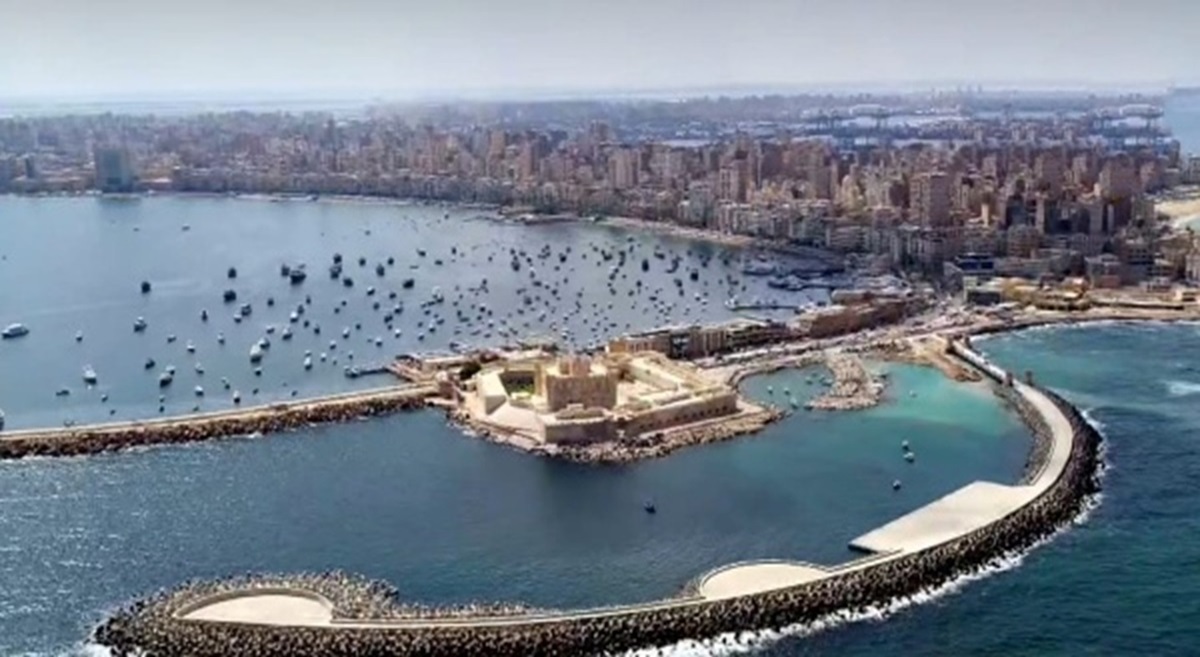
The Qaitbay Citadel project is located at the end of Pharos Island in the far west of Alexandria. It was built on the site of the ancient Lighthouse of Alexandria, which collapsed in 702AH due to a devastating earthquake during the reign of Sultan Al-Nasir Muhammad bin Qalawun. Construction of the citadel began under Sultan Al-Ashraf Abu Al-Nasr Qaitbay in 882 AH and was completed in 884 AH. The citadel covers an area of 150 meters by 130 meters and is surrounded by the sea on three sides, exposing it continuously to strong waves and storms that pose a significant threat.
The General Authority for Shore Protection in Egypt carried out the necessary protection works for Qaitbay Citadel against high waves and continuous erosion of the main rock on which the citadel stands, in addition to developing and enhancing the area in front of it with the aim of attracting, activating, and supporting tourism investments in the region. The project included constructing a breakwater 520 meters long, a marine harbor 100 meters long, and a concrete walkway 120 meters long built on piles to allow water movement in and out, plus four towers at the entrance and exit of the walkway designed in the same architectural style as the citadel’s guard towers, along with a 30-meter stone spur to connect the project to the surrounding area.
Social and economic dimensions of the project
Qaitbay Citadel is one of the most important tourist attractions in the city of Alexandria. The project aims to develop and upgrade the area in front of the citadel to attract, activate, and support tourism investments and increase job opportunities for young people of both genders through various activities related to the citadel area. The citadel and its surroundings serve as a promenade for the residents of Alexandria and its visitors, and improving the area through protection projects has a positive impact on the quality of life for residents by providing a safe, organized environment that respects the city’s heritage. Protecting Qaitbay Citadel also preserves an important part of world heritage and Egyptian memory, as it is a symbol of resistance and defense across eras. Maintaining it in good condition strengthens citizens’ connection to their heritage and enhances the sense of belonging, making it a vibrant center for culture and heritage.
The project was completed in early 2024 at a cost of approximately 320 million Egyptian pounds.
Environmental dimensions of the project
Since Qaitbay Citadel is an important historical monument, coordination took place with the Ministry of Tourism and Antiquities and the Sunken Antiquities Sector before and during the project’s implementation to preserve the priceless submerged antiquities in the area and to maintain the architectural style of the project zone. This included building four towers at the walkway’s entrance and exit in the same architectural style as the citadel’s guard towers. The project design took into account providing the necessary protection for the citadel while preserving water quality in the area in front of it, achieved by constructing the concrete walkway on piles to allow water inflow and outflow in the project area. Climate change and the expected rise in sea level were also considered. All these efforts aim to improve the lives of local residents and help provide stability for their resources and living environment.